

Spring Meeting of the Council of the Swiss Abroad - 19./20. March 2026
Updated: Apr 30
April 2026. By Carmen Trochsler & Beat Knoblauch
The delegates of the Council of the Swiss abroad met in Bern on 19. and 20. March 2026. Australia was represented with Carmen Trochsler (Adelaide), Barbara Zingg (Broome), Beat Knoblauch (Sydney) and Thomas Hofer (Perth, deputy delegate). Roland Isler (Melbourne) joined the Council meeting online.
It was a great pleasure to meet fellow delegates from all over the world in person over these two days, as well as members of the Swiss Parliament, the Department of Foreign Affairs, the OSA partner organisations such as swissinfo, educationsuisse, the Cantonal Bank of Zurich and the OSA team in Berne. Our thanks go to the OSA Secretariat and Committee for organising the meeting.

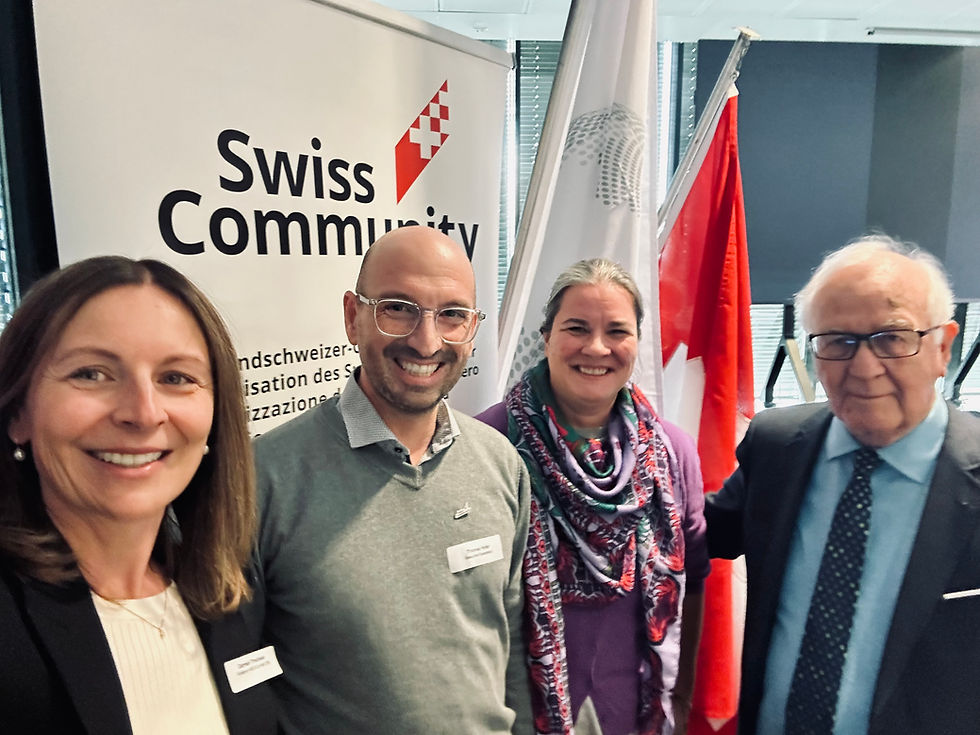
Australian Delegation in Bern: Beat Knoblauch, Carmen Trochsler, Thomas Hofer and Barbara Zingg


Images: Auslandschweizerorganisation (Marc Lettau) and own
Key Topics and News in a nutshell

EU / Free Movement: Around 60% of Swiss citizens living abroad reside in the EU, making the issue of free movement particularly relevant for the Organisation of the Swiss Abroad. We therefore had an exchange at the Federal Palace with members of the Swiss Parliament representing the six major political parties. Discussions focused on the future of Switzerland–EU relations, including the planned Bilateral Agreements III (with a possible public vote in mid-2027) and the upcoming referendum of 14 June on the “No 10 million Switzerland” initiative.
The initiative, launched by the Swiss People's Party, seeks to cap Switzerland’s population at 10 million. It is not supported by the other five major political parties. The parliamentary debate reflected a broadly critical stance, particularly from an economic perspective, with recognition of the importance of foreign labour to Switzerland.
Concerns were raised regarding the potential implications of the initiative for the free movement of Swiss nationals residing in the Schengen area. In this context, the Council adopted a resolution recommending rejection of the initiative.
For those further interested in this topic, a summary of the discussion and the delegates’ questions are available on Swissinfo. See also the media release of OSA.

(E-)Voting: Swiss citizens registered in the cantons of SG, BS, TG, and GR have been able to use e-voting again since 2023/2024. In a positive development, those registered in the cantons of LU and GE are also expected to gain access later this year. However, most cantons are not currently reintroducing e-voting.
An update was submitted to the Council, outlining the current situation, future outlook, and potential actions for the Organisation of the Swiss Abroad to improve access to voting. The report was prepared by Australian Delegate Carmen Trochsler in collaboration with the OSA’s legal department. A presentation by Swiss Post, the developer of the e-voting system currently used in Switzerland, complemented these findings.
The key message is that, while some improvements have been achieved - particularly through the reintroduction of e-voting in selected cantons and earlier dispatch of voting materials - progress remains slow. Democratic participation continues to be difficult, and in some cases effectively impossible, for Swiss citizens in a number of countries outside Europe.
OSA will continue to advocate for more cantons to join the e-voting test phase and for the introduction of e-voting as an official voting channel. Further efforts should address legal barriers to earlier dispatch, where logistically possible, and explore alternative delivery methods, including the potential use of E-ID, as outlined in the report.
The timely delivery of voting materials and the costs of sending the material also remains a challenge for many in Australia. Check out our information on this topic in the FAQ Section where we wil l continue to provide updates.
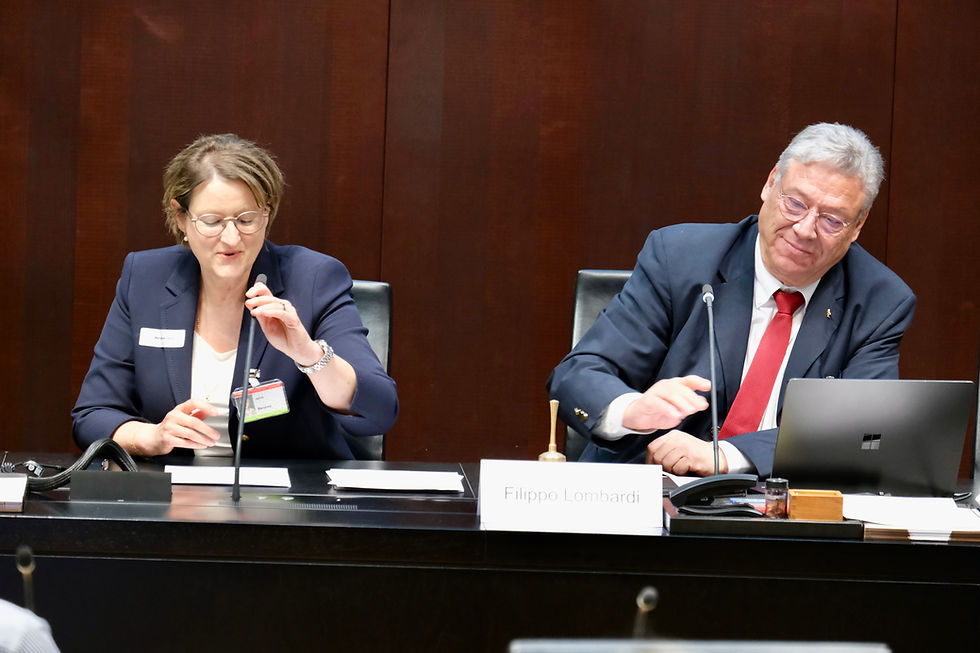
Swiss in the Middle East: Marianne Jenni, Director of the Consular Directorate of the Department of Foreign Affairs, provided an update on the impact of the situation in the Middle East on Swiss citizens, particularly those residing in the region. A crisis cell worked intensively to support Swiss nationals who were stranded, within the limits of what was possible. Individuals registered on the Travel Admin app (Swiss Tourists) or with a Swiss representation (Swiss residing in the region) were kept regularly informed. Attention was given to especially vulnerable individuals, including families with young children and medical cases. In total, around 30 people received targeted assistance. In addition, solutions on a commercial basis were developed in cooperation with Swiss/Edelweiss and local airlines to facilitate onward travel.
Crisis situations can occur at anytime and anywhere. This is a timely reminder to ensure that you are registered with the Swiss consulate in Sydney and that your contact details, including your email address, are kept up to date so that you can receive relevant information from the Swiss authorities.

ETIAS - New Travel Authorisation System later this year: ETIAS (European Travel Information and Authorisation System) is a new entry requirement for non-EU nationals from 59 visa-exempt countries (including Australia) travelling to 30 European countries (including Switzerland). Once operational, it will therefore apply to Australian citizens travelling to Switzerland. It is currently expected to be introduced in the last quarter of 2026. Further details are available on the official website here.
Swiss citizens are not required to obtain an ETIAS travel authorisation. However, they must enter (and board the plane to) Switzerland and the EU using a valid Swiss passport.
A webinar on 16. June 2026, organised by the Organisation of the Swiss Abroad and the Department of Foreign Affairs will address this topic and related questions, also for Dual Nationals. Reminders will be shared ahead of the dates on our Social Media and website.

Funding for services relevant to the Swiss Abroad: Good news - in early March, the Federal Parliament rejected budget cuts proposed by the Government affecting the Organisation of the Swiss Abroad (OSA), Swissinfo, and Swiss schools abroad. This was a strong signal of continued support for maintaining key services and relationships with the Swiss diaspora. The Organisation of the Swiss Abroad actively defended the interests of Swiss citizens abroad through various interventions, supported by a strong parliamentary network as well as public initiatives.
The Australian Delegation also contributed to these efforts, by preparing a submission of the Swiss Alliance Australia as part the Federal Consultation process and supporting the Swissinfo petition on the SAA social media channels and News Blog and via personal endorsements

New Director of OSA, Daniel Hunziker Daniel Hunziker was welcomed as the new Director of the Organisation of the Swiss Abroad. He was appointed last October by the Board and started his role on 1st January 2026. He has long-term experience as a Swiss Abroad and is familiar with the expectations, challenges and realities of being a Swiss Abroad. He lived from 2007 to 2025 in New Caledonia, where he also represented Switzerland for many years as Honorary Consul. More here.

Two new members of Parliament in the Council: The Delegates elected two new members to the 140 head strong Council as “Inland“representatives : Christine Badertscher (Greens) and Simon Michel (FDP). Both are members of the Swiss National Council. The Council of the Swiss Abroad consists of 120 members living abroad and 20 members living in Switzerland, often members of parliament or representatives of other institutions that are close to or relevant for the Organisation of the Swiss Abroad.

Direct elections for the Council of the Swiss Abroad: In 2025, around 47 of the 120 delegates representing Swiss citizens abroad were elected through direct elections, meaning that all registered Swiss citizens in participating countries could vote directly (online) for their preferred candidates. This marked a significant shift from a system of primarily indirect elections, where delegates are elected by Swiss clubs. The experience from 2025 has shown the significant scope of work involved, including legal, IT, and organisational questions that need to be addressed in coordination with various partners such as the FDFA (EDA), Voting Tool provider, and election districts around the world. Carmen Trochsler, on behalf of the OSA board, provided a brief update on this topic, highlighting the need for early planning to ensure the elections 2029 can be implemented successfully.
Australia was amongst the first movers for direct elections, having transitioned in 2017 from a system of election by clubs to voting rights for all registered Swiss citizens. The Australian delegates Roland Isler and Carmen Trochsler have been working closely with the project team responsible for the broader introduction of direct elections in 2025.
The next time the Council of the Swiss Abroad gathers will be in Brunnen, on 20.-22. August 2026.
To our clubs in Australia - we will see you hopefully all at the upcoming Swiss Clubs Presidents meeting in November in Brisbane.
And to our Swiss Community in Australia, if you have any feedback, questions, or topics that you want to bring to our attention, please don't hesitate to contact us!
Links to the meeting
Where to find helpful information
Contact the CSA Delegates


Comments